About Grounded Present
I help you discover what grounds you through guided stretching, gentle yoga, and reflection.
I am more comfortable in myself now, and grounding practices have been part of that.
They help me come back into my body when I feel disconnected from myself, pay attention to what is happening around me, and be more present with other people and the world. I hope to share some of the practices and ways of noticing that have been useful to me — not as prescriptions, but as possibilities to explore.
Where this comes from
My own yoga practice started in 1998, alongside a college course in Buddhist philosophy — not by accident, but during a year that reshaped who I thought I was, or was trying to be. It took a long time to come back to. I earned my RYT-200 in 2023 and started working as a stretch provider in 2024, but the practice itself has been part of my life a lot longer than the credentials suggest.
I studied psychobiology at Wellesley College because I am interested in the relationships among the body, mind, behavior, and environment. I later earned an M.A. in Mental Health Counseling from Boston College and an M.S.Ed. in Higher Education Administration from the University of Miami. I spent much of my working life in mental health, academic research, and education, including work at several research institutions. My foundation is intellectual and academic: I value evidence, careful inquiry, and continued learning. Those years shaped how I listen, ask questions, and avoid assuming that I already know what another person needs.
At the same time, I don’t believe that all meaningful knowledge comes from institutions. I believe it is important to read books and take research seriously, but also to pay attention to your own experience and listen to your own voice.
Working in horticulture gave me another way to understand many of those same relationships. Gardening and caring for houseplants have become forms of meditation for me — practices of slowing down, observing, responding, and tending without forcing an outcome.
I have never stopped learning. I’m especially interested in research on biophilia and the ways architecture, nature, and the built environment can affect stress, attention, and well-being. It gives evidence and language to something I have long noticed in my own life: our surroundings matter.
That curiosity is part of what I bring to Grounded Present. I am interested in what helps, what does not, and what we can discover by paying closer attention to ourselves and the world around us.
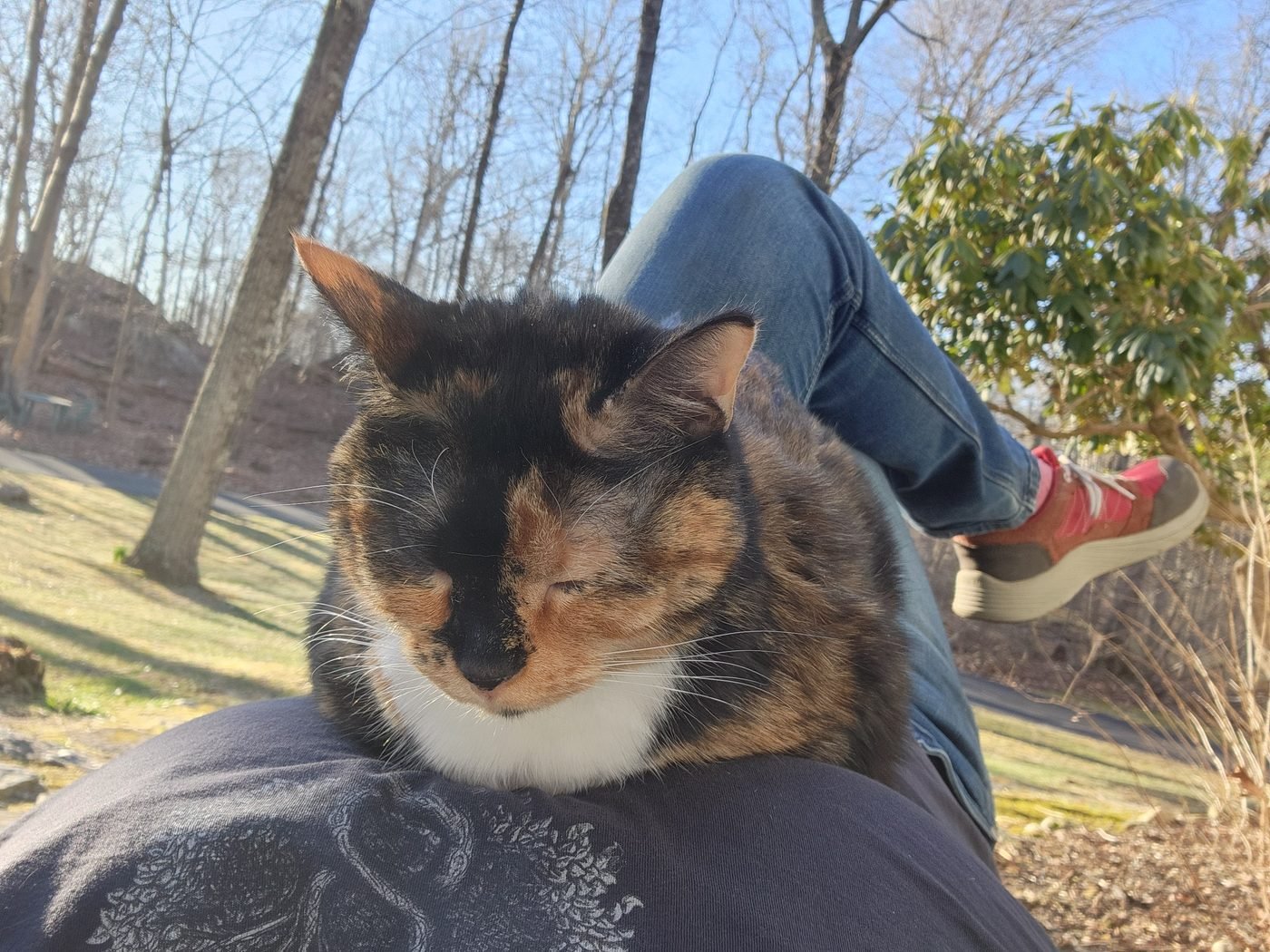
I protect my peace now. And my space. And I focus on what matters to me.
I use these words as a personal grounding mantra. Repeating them helps me feel more present and settled in myself. You can borrow them if they feel useful, or we can work together to discover what works for you.
This is me.
In this body.
With this mind.
In this place.
In relation to others.
I belong here.
Prefer to talk it through first? Call or text me.
See How We Can Work Together